Twelve Episodes, Two Hundred Chapters: The Math That's Breaking Manga Fans' Hearts
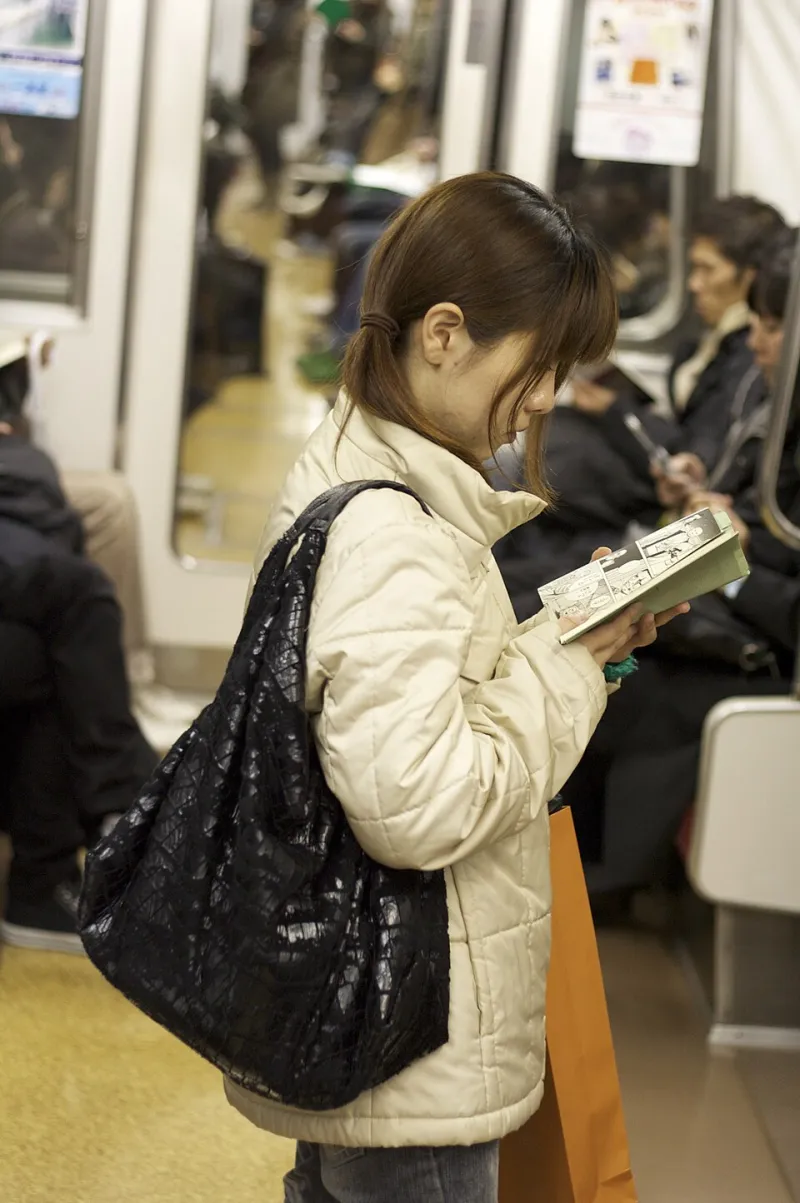
Photo: Richard Giles, CC BY-SA 2.0, via Wikimedia Commons
Here's a scenario that plays out in anime communities every single season: a beloved manga finally gets an adaptation announcement. The fandom loses its collective mind. Fan artists start trending on Twitter. Reddit threads hit thousands of upvotes. And then the adaptation drops, and within three episodes, the manga readers have gone completely silent — not because they're satisfied, but because they're grieving.
Jiji would tell you that patience is a virtue. But even he'd have to admit: some of this grief is completely justified.
The Compression Problem Nobody Wants to Talk About
Let's do some honest math. A weekly manga running for two years produces roughly 100 chapters. A single cour anime season — the standard 12 to 13 episodes — can realistically adapt somewhere between 30 and 50 of those chapters without feeling like a blur. Do the arithmetic and you'll see the problem immediately.
Studios aren't always making artistic choices when they cut content. Sometimes it's a budget decision. Sometimes it's a scheduling decision. Sometimes it's a bet that the adaptation will drive manga sales, so leaving things out is actually a feature, not a bug — a deliberate tease designed to push viewers toward the volumes. That's a real business strategy, and it's one that treats the anime itself as a commercial rather than a story.
The result? Pacing that feels like someone hit fast-forward during every emotional beat. Characters who exist in the manga as fully realized people get flattened into their most surface-level traits because there simply isn't time for the quiet chapters that built them up. Subplots that recontextualize the main narrative get cut entirely, so the ending lands with a thud instead of the gut-punch readers experienced.
When It Actually Works (And Why)
To be fair to the studios — and Jiji-Sama is nothing if not fair — there are adaptations that genuinely nail the translation from page to screen.
Fullmetal Alchemist: Brotherhood is the obvious example everyone reaches for, and for good reason. It had the runway to develop its story properly, a production team that treated the source material with visible respect, and an audience that had already seen one adaptation stumble. The pressure to get it right was enormous, and the result holds up decades later.
More recently, Dungeon Meshi (Delicious in Dungeon) demonstrated what happens when a studio — in this case Studio Trigger — genuinely commits to honoring the pacing of a manga that was never built around action spectacle. The show breathes. Characters eat food and argue about cooking and the emotional stakes grow slowly, exactly as they did in the original. It's not a coincidence that it became one of the most universally praised adaptations in recent memory.
What these successes share is space. Not just episode count, but a willingness to let scenes exist without rushing toward the next plot point. That's harder to manufacture than it sounds.
The Cuts That Actually Hurt
Not all content cuts are equal. Trimming a filler conversation here or abbreviating a travel sequence there? Manga readers can live with that. What breaks people is when adaptations cut the material that explains why characters make the choices they make.
Take internal monologue. Manga has a tool that anime struggles with: the thought bubble. In a panel, you can spend a full page inside a character's head, watching them rationalize a decision or wrestle with a fear, and it costs nothing in terms of pacing. In animation, that same content either becomes voiceover narration — which can feel clunky — or it gets cut, and suddenly a character's motivation reads as impulsive or inconsistent.
This is why manga readers sometimes watch an adaptation and feel like they're watching a stranger wearing a familiar face. The character looks right. The voice acting might even be perfect. But something essential got left on the cutting room floor, and the person on screen makes choices that feel inexplicable without the context that only exists in the source material.
Animation Quality and the Discourse It Generates
Separate from pacing, there's the animation quality conversation — which is its own minefield. Manga readers sometimes get accused of being impossible to please when they criticize animation, but the complaint is usually more specific than "this doesn't look like the art I love."
The real issue tends to be consistency. An adaptation can have a gorgeous first episode — high-budget key animation, fluid fight sequences, lush backgrounds — and then visibly deflate by episode four when the production schedule catches up to reality. Studios sometimes front-load quality to generate buzz and then coast on that goodwill while delivering noticeably cheaper work in the middle of the run. Manga readers notice. They always notice.
There's also the question of what gets the budget treatment. If your favorite character's big emotional scene — the one that made you put down the volume and stare at the ceiling for a while — gets handled with static shots and minimal movement, while the action sequences get the full sakuga treatment, that's a statement about priorities. It might not be intentional, but it communicates something about what the production team valued.
Is the System Setting Everyone Up to Fail?
Here's the uncomfortable question sitting underneath all of this: is the current model of anime production structurally incompatible with faithful adaptation?
The seasonal release model rewards speed. The business incentive to use adaptations as manga advertisements rewards incompleteness. The production schedules that have animators working brutal hours reward cutting corners wherever possible. None of these pressures are designed with story fidelity in mind.
Manga readers who stay mad aren't being irrational. They watched something they loved get processed through a system that was never optimized for doing it justice, and then they got told to be grateful it was adapted at all. That's a frustrating place to stand.
The good news — and Jiji-Sama always looks for the good news — is that when the conditions are right, when a studio has time and resources and genuine investment in the material, the results can be extraordinary. The adaptations that work prove the form isn't the problem. The constraints are the problem.
Until those constraints change, manga readers are going to keep watching with their arms crossed. And honestly? That's the most loyal thing they can do. They care too much to pretend otherwise.