Broke and Obsessed: The Hidden Price Tag on Anime's Most Collectible Music
There's a particular kind of pain that hits when you look up the official soundtrack for your favorite anime and realize the CD is going for $65 on a third-party reseller — and that's considered a deal. American anime fans have been navigating this financial minefield for years, and somehow, the community keeps spending. Jiji-sama approves of the dedication, even if your bank account does not.
Anime music occupies a strange corner of the entertainment economy. It's everywhere — streaming on Spotify, looping on YouTube, remixed on TikTok — and yet owning it in any meaningful, physical sense remains an expensive act of devotion. Understanding why requires a quick look at how this music actually gets made and sold.
Why Anime OSTs Cost So Much to Begin With
Producing an anime soundtrack isn't a side project. Composers like Yoko Shimomura, Hiroyuki Sawano, and Yuki Kajiura command serious fees, and the orchestral sessions, licensing negotiations, and studio time that go into a full series score can rival the cost of producing the animation itself. That expense gets baked into the retail price before a single disc ships.
Then there's the distribution model. Japan's music industry has historically leaned hard into physical media, and anime soundtracks are typically released as Japanese domestic products first — sometimes only. A standard two-disc OST from a major title can retail for the equivalent of $35 to $50 USD at a Japanese retailer. Add international shipping, import fees, and the markup from a middleman seller, and you're suddenly looking at $80 for something that didn't come with a poster.
Limited print runs make everything worse. Labels frequently produce just enough units to satisfy initial demand, creating artificial scarcity that the secondary market exploits immediately. The moment a beloved series ends its run or a composer announces a new project, old releases spike. It's not unusual to watch a soundtrack you passed on six months ago triple in price overnight.
The Secondary Market Is Chaotic and Kind of Thrilling
Ask any serious collector and they'll describe the OST secondary market as equal parts treasure hunt and anxiety spiral. Platforms like Yahoo! Japan Auctions, Mercari Japan, and eBay have become the primary hunting grounds for American fans, and navigating them requires patience, a solid proxy service, and a willingness to lose bidding wars at 2 a.m.
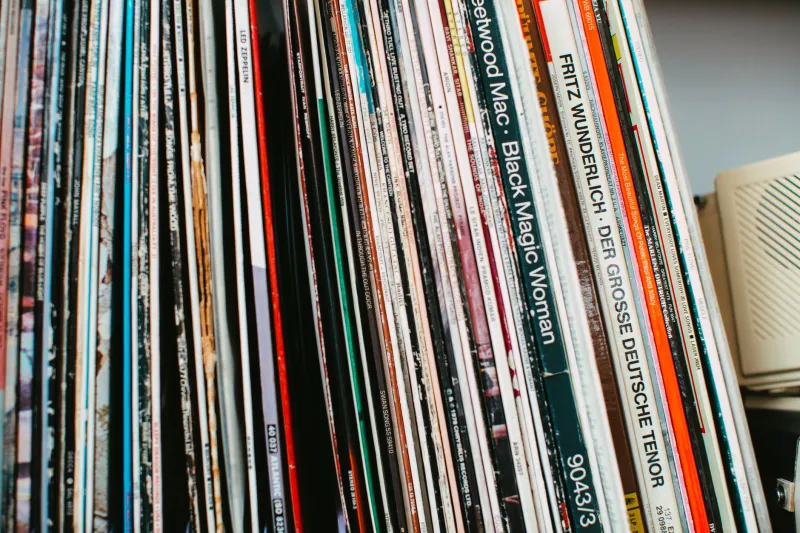
Vinyl editions add another layer of chaos entirely. The past few years have seen a surge in anime OST vinyl releases, some officially licensed and others pressed in limited quantities for specific events or regional markets. A vinyl edition of a beloved Cowboy Bebop or Violet Evergarden score can fetch anywhere from $120 to several hundred dollars depending on condition and variant. These aren't purchases — they're investments with emotional stakes.
The community has developed its own informal infrastructure around this. Discord servers dedicated to OST collecting share alerts when rare items surface. Spreadsheets circulate tracking historical prices. Some fans pool resources to split shipping costs on bulk orders from Japan. It's grassroots economics in action, and honestly, it's kind of beautiful.
Streaming Fills the Gap (But Not the Shelf)
For fans who want the music without the financial commitment, streaming has become the practical middle ground. Spotify, Apple Music, and Amazon Music now carry a genuinely impressive catalog of anime soundtracks, and services like AWA — a Japanese streaming platform that's expanded its reach — go even deeper into niche titles.
But collectors will tell you straight up: streaming doesn't scratch the same itch. There's something fundamentally different about holding a physical release, reading the liner notes, and knowing you own a piece of the thing you love. Digital access feels like borrowing. A CD on your shelf feels like belonging.
This tension is real, and it's not unique to anime fandom — vinyl culture and physical media enthusiasts across genres deal with the same push and pull. What makes anime OST collecting distinct is the geographic barrier layered on top. Most of this music was never intended to be easily accessible to American buyers, which makes acquiring it feel like a minor victory every single time.
The Artists and Labels Are Starting to Notice
The good news is that the industry is slowly responding to international demand. More labels are offering direct international shipping through platforms like CDJapan and HMV Japan, cutting out some of the markup from third-party resellers. Digital storefronts like Bandcamp have become a legitimate channel for independent anime composers to sell directly to fans worldwide.
Some composers have started acknowledging their international fanbases explicitly. Hiroyuki Sawano, whose work spans Attack on Titan, Mobile Suit Gundam Unicorn, and 86, has seen official merchandise and music releases increasingly marketed toward global audiences. When labels see that American fans are paying $100 on the secondary market for something that retailed for $40, the message eventually lands.
Streaming exclusives are also starting to appear — official releases that skip physical media entirely and go straight to global platforms. Purists grumble, but for the fan who just wants to listen on the commute without mortgaging their record collection, it's a welcome shift.
So Is It Worth It?
That depends entirely on what you're buying. A streaming subscription gets you access. A $70 import CD gets you ownership, history, and a physical artifact that says something about who you are and what you care about. A $200 limited vinyl edition gets you all of that plus the very specific joy of watching houseguests clock it on your shelf and ask questions.
Jiji-sama has seen a lot of trends come and go in the anime world, but the devotion of OST collectors never wavers. These are people who set alarms for auction end times, who calculate shipping weights before adding to cart, who genuinely debate whether a repress holds the same value as an original pressing. That level of passion is its own kind of currency.
The anime soundtrack economy is expensive, occasionally maddening, and absolutely not rational by any conventional measure. But then again, neither is most of what we love about this fandom. And if the opening theme from your favorite show is still living in your head five years later, maybe dropping $60 on the physical release isn't so unreasonable after all.
Your wallet might disagree. Jiji-sama understands completely.