Stuck in Your Head Forever: Why Anime Soundtracks Hit Different Than Anything Else You've Ever Heard
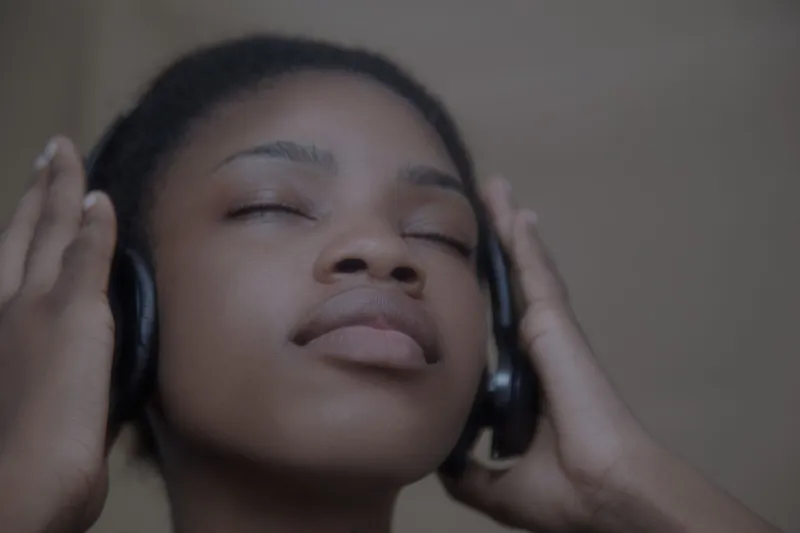
It happens without warning. You're folding laundry, spacing out on the commute, or just staring at the ceiling at 2 a.m., and suddenly — that theme is back. Not the opening. Not the ending. The quiet, haunting little melody that played during the scene where everything fell apart in episode 22 of a show you watched years ago. And now you're emotional about it all over again for absolutely no reason.
Anime soundtracks have a reputation for this kind of psychological squatting. They move in, they don't pay rent, and they absolutely refuse to leave. But why? What is it about certain anime OSTs specifically — not film scores, not video game music, not even Western TV — that makes them so uniquely good at burrowing into the long-term memory of fans who weren't even trying to memorize them?
The answer involves brain chemistry, compositional technique, cultural tradition, and some composers who are honestly operating on a level that deserves way more mainstream conversation in the US.
Your Brain on Leitmotif
Let's start with the science, because it's actually pretty wild. Memory researchers have a term for involuntary musical recall: involuntary musical imagery, or IMI. Colloquially, we call them earworms. And while everyone gets them, the triggers matter enormously. Music that's emotionally loaded — music your brain associated with a strong feeling at the moment you first heard it — is dramatically more likely to resurface unprompted.
Here's where anime has an unfair advantage. A well-crafted anime OST doesn't just play in the background. It's engineered to sync with emotional peaks — the first confession, the death of a mentor, the moment a character finally understands what they've been fighting for. Your brain isn't just filing the music away. It's stapling it directly to the feeling. So when the melody comes back, so does everything else.
Western TV scoring often works hard to stay invisible, supporting scenes without drawing attention. Anime composers, by contrast, frequently write music that's meant to be noticed. It's a feature, not a bug.
The Composers Who Changed the Game
You can't talk about this topic without naming names. Yoko Shimomura, Hiroyuki Sawano, Yuki Kajiura, Joe Hisaishi — these are composers with devoted international followings who routinely sell out concert halls across the US. That's not normal for soundtrack composers. That's a fandom.
Yuki Kajiura, in particular, has built a signature sound so distinct that fans can identify her work within seconds. The layered female vocals, the blend of orchestral strings with synthetic elements, the way her melodies feel like they're mourning something that hasn't happened yet — it's immediately recognizable and almost impossible to shake. Fans on Reddit have entire threads dedicated to the specific Kajiura moment in a series: the point where her music made them realize they were in way too deep.
Hiroyuki Sawano operates differently. His scores — Attack on Titan, Aldnoah.Zero, Mobile Suit Gundam Unicorn — hit like a truck. Big, operatic, almost overwhelming. But embedded inside those massive arrangements are small recurring motifs that sneak past your defenses while you're busy being overwhelmed by the spectacle. You don't notice them consciously. You just feel vaguely emotional for the rest of the week.
Joe Hisaishi is in a category that crosses over into general American awareness thanks to Studio Ghibli, but his ability to write a melody that feels like a childhood memory you never actually had is genuinely unmatched. Ask any American who watched Spirited Away as a kid. They can still hum "One Summer's Day" without even trying.
Insert Songs Are a Specific Kind of Weapon
If background score is the slow leak, insert songs are the flood. An insert song — a vocal track dropped into the middle of an episode at exactly the right moment — is one of the most effective emotional delivery systems in storytelling, and anime has been using them with precision for decades.
"Unravel" from Tokyo Ghoul. "Euterpe" from Guilty Crown. "Crossing Field" from Sword Art Online. "A Cruel Angel's Thesis" — okay, that's an OP, but you get the point. These tracks get attached to specific scenes with such intensity that hearing them out of context years later can genuinely produce a physical reaction in fans. Throat tightens. Eyes get a little wet. The whole thing is embarrassing and completely involuntary.
Fans we talked to described the experience in almost identical terms. "I heard the Your Lie in April OST playing in a coffee shop and had to leave," said one community member from Chicago. "Not because it was sad. Because I wasn't prepared to feel that much at 10 in the morning."
Another fan from Los Angeles put it this way: "The Clannad music is basically a trauma response at this point. My brain hears the first few notes and just starts preemptively grieving."
Why Western Scores Don't Usually Do This
This isn't a knock on Western film or TV music — Hans Zimmer and Ennio Morricone are legends, full stop. But the relationship between American audiences and Western TV scoring is fundamentally different. Western TV music is often deliberately designed to blend in, to support without overwhelming. The score for a prestige drama isn't supposed to be the thing you remember; the dialogue is.
Anime inverts this. The music is frequently the emotional headline. Dialogue can be sparse or even absent during key scenes specifically so the OST can do the heavy lifting. That's a creative choice that puts enormous trust in the composer — and when it works, it creates moments where the music becomes the memory. You don't remember what the characters said. You remember what the strings did.
There's also a cultural dimension here. Japanese popular music has a long tradition of melodic complexity and emotional directness that doesn't always map onto Western pop sensibilities. Anime composers grew up in that tradition. The result is music that US fans often describe as hitting "differently" — more openly emotional, less concerned with ironic distance.
The Jiji Wisdom Here
Here's the thing Jiji-sama would probably want us to sit with: the fact that a piece of music from a cartoon you watched on a laptop at 1 a.m. can still make you feel something years later isn't trivial. That's art doing exactly what art is supposed to do. It's the oldest function of music — to mark moments, to carry meaning forward, to remind you that you felt something real.
Anime soundtracks are genuinely, seriously good. Not "good for what they are" good. Just good. The composers working in this space are operating at the highest level of their craft, and American audiences are slowly, finally starting to figure that out. Concert tours sell out. Streaming numbers for OST albums are enormous. A generation of US kids who grew up watching fansubs in the early 2000s are now in their 30s with disposable income and a lot of feelings about violin arrangements.
So the next time a melody from a show you finished years ago ambushes you out of nowhere — let it. It's not an earworm. It's a receipt. Proof that something got through.
And honestly? That's kind of the whole point.