Swipe Right for Subs: How Anime Became the Way America Falls in Love
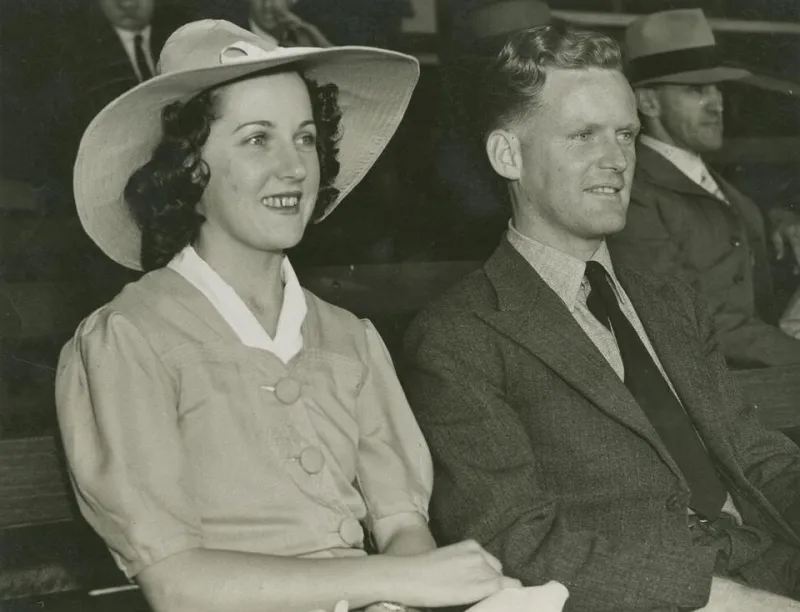
Photo: Jackman, George; Contributor(s): Queensland Newspapers Pty Ltd, Public domain, via Wikimedia Commons
The first date was, by every traditional metric, a disaster. Marcus took Priya to see a screening of Your Name at a repertory theater in Chicago. He'd never seen it. She'd seen it eleven times. He spent the whole movie trying to sneak glances at her face during the comet scenes instead of watching the screen.
They've been married three years now.
"I knew it was over for me when he cried at the stair scene," Priya tells me over video call, while Marcus protests from off-camera that he 'had something in his eye.' "Like, that's the test. Anybody can like anime. But do you feel it?"
The Watch-Party Is the New Dinner Date
Ask around in fandom spaces and you'll hear versions of this story over and over. A shared Crunchyroll queue. A Discord server where two people keep ending up in the same VC at 1 a.m. arguing about whether Fullmetal Alchemist: Brotherhood is actually better than the 2003 version (it is, fight us). The slow, episode-by-episode intimacy of watching something together when you can't be in the same room.
For a generation that grew up on dating apps and pandemic-era isolation, shared fandom does something small talk never could. It's a compatibility filter built right in. If someone's red flags are "doesn't get why March Comes In Like a Lion is a masterpiece," you know early. If they suggest a Frieren watch-through on date three, you might be looking at your person.
Sociologists have a dusty term for this — homophily, the tendency to bond with people who share our interests. But what's changed is the primacy of it. Mutual friends used to introduce couples. Then it was proximity, then algorithms. Now, for a huge swath of young Americans, it's fandom first, everything else second.
The Wedding Was Themed, Obviously
The commitment runs deeper than first dates. Anime-themed weddings have gone from punchline to Pinterest board: ceremony processions set to Joe Hisaishi arrangements, cake toppers of the couple's favorite ship, guests asked to wear colors matching Studio Ghibli palettes. One couple in Texas reportedly walked out to the One Piece theme. Nobody objected. Everybody cried.
Even the proposal has its own grammar now. Rings hidden in replica Poké Balls. Engagements staged at the exact real-life staircase from a famous anime — which, if you've ever stood in a crowd of pilgrims at one of those spots, tracks completely.
It's Not About the Anime
Here's the thing the cynical takes always miss: this isn't really about anime. It's about having a shared language for feelings that are hard to say out loud.
Telling someone "I love you" is terrifying. Telling someone "you're my Chihiro and I'd brave the spirit world for you" is, somehow, easier — and means the same thing. Fandom gives couples a vocabulary, a private mythology, an inside-joke economy that compounds like interest over years.
Marcus and Priya's wedding vows included a Your Name reference. Their first dance was to a RADWIMPS song. Their kid, born last year, is named after a character — and no, they're not telling us which one, because some things you keep for yourselves.
So, Is Fandom Dating Healthy?
The usual worry applies: what happens if the fandom fades? Honestly, the couples we talked to had a pretty consistent answer. The shows change. The loving-something-together doesn't. You finish one series and start another. The watching is the point.
Which is a pretty good metaphor for the whole thing, when you think about it. Love isn't one perfect season. It's the willingness to keep queuing up the next episode, together, even when the pacing gets slow.
Especially when it gets slow.