Why That Bowl of Ramen in Anime Looks Better Than Anything in Your Fridge
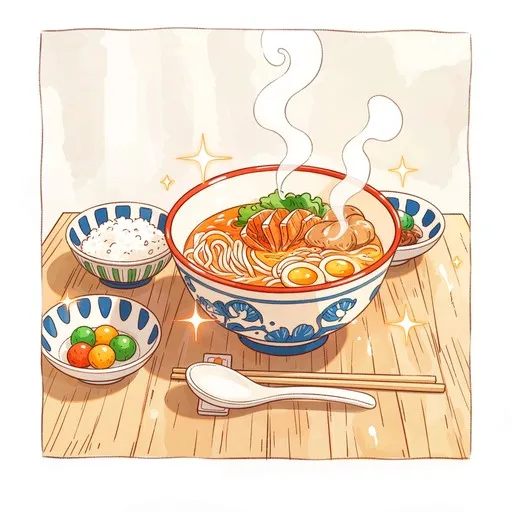
Photo: anime style ramen bowl food illustration steaming, via images.stockcake.com
There's a specific moment every anime fan knows by heart. The camera pushes in. Steam curls off the bowl. A character takes one bite, and their entire face collapses into bliss. Meanwhile, you're eating cold cereal over the sink at 11 p.m.
Anime food is a scam, and we're all willing victims.
The Ghibli Breakfast Problem
Start with the obvious culprit: Studio Ghibli. The breakfast scene in Howl's Moving Castle — bacon crackling in a pan, eggs dropped in with perfect timing — has spawned thousands of YouTube recreation videos. Almost all of them end the same way: "It was good, but it wasn't... that."
That's not a cooking failure. It's a design success. Ghibli's food animators use warm color palettes, exaggerated steam, and that signature slow-motion sizzle to trigger something scientists call "visual hunger" — the same reason food photography is a billion-dollar industry. Anime just does it better than a camera ever could, because anime isn't bound by physics. That cheese pull can stretch forever. That broth can glow.
The Slurp Heard Round the World
Then there's Naruto at Ichiraku, Food Wars! turning every bite into a spiritual experience, and the ramen close-ups in Midnight Diner that made an entire generation of Americans buy dashi stock. Food Wars deserves its own therapy session, honestly — no dish has ever been animated with that level of... enthusiasm.
But the king of the genre might be the humble onigiri. Every slice-of-life show has one. The rice is always perfectly packed, the nori always crisp, the filling always a surprise. American fans have tried to replicate it with varying success, usually discovering that rice is harder to work with than it looks.
The Philosophy in the Pot
Here's what a lot of Western food media misses: anime food isn't really about the food. It's about care. The idea that someone woke up early to make breakfast for someone else, that a bento box is a love letter written in tamagoyaki — that's the emotional payload. When Spirited Away's Chihiro eats the rice ball Haku gives her and cries, the food is a metaphor for kindness itself.
Japanese home cooking culture has a word-adjacent concept: teishoku thinking, the idea that a meal is composed, balanced, and offered. Studios capture that by animating the process — hands chopping, ladles stirring — not just the result. The care is the flavor.
Your Recreation Attempt, Ranked
If you're going to try anime cooking at home (and you will), a few tips from fans who've been there:
- Tamagoyaki requires a rectangular pan. Stop trying to fold it in a skillet. You're making scrambled eggs with extra steps.
- Ichiraku-style ramen is a weeknight cheat meal, not a pilgrimage. Good instant noodles + soft-boiled egg + scallions = 80% of the way there.
- Don't skip the pickle. Every anime side dish has one for a reason. It resets your palate between bites.
- Presentation is half the meal. A $1,200 Japanese chef's knife won't help you. A nice bowl will.
Jiji's Verdict
Will your homemade katsudon ever look like the one from Yuri on Ice!? No. Will it taste good anyway, and make you feel, for one moment, like the main character of a cozy episode? Absolutely.
And honestly, that's the whole point. Anime taught us that food made with attention is food worth eating — even if the attention in your case is just remembering to take the egg off the heat.
Now if you'll excuse us, there's a very ambitious tamagoyaki attempt happening in the Jiji test kitchen, and expectations are, as always, dangerously high.